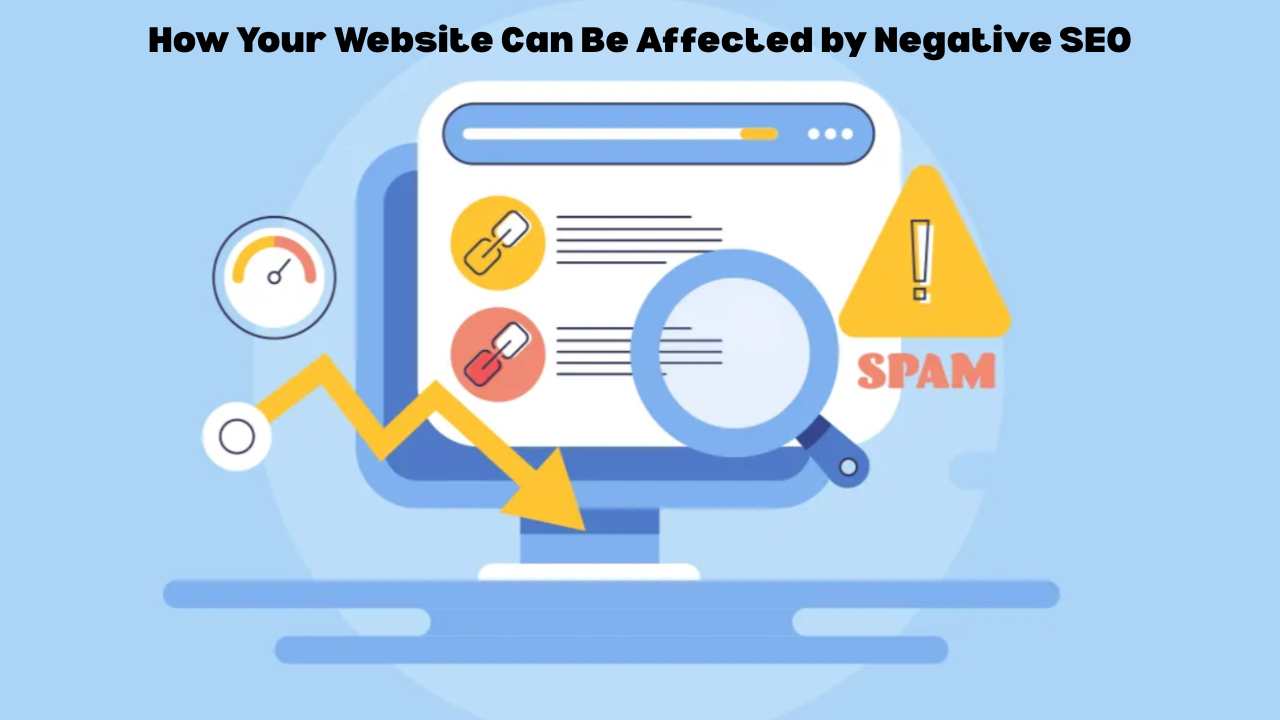
SEO helps websites to find their place on the Web, thus giving them visibility and traffic that will remain sustainable and grow with time. It is one thing that can build trust with search engines and create results that are very consistent over time. And, as with most competitive advertising channels, SEO does have a dark side, allowing unethical companies to engage in efforts that tarnish a competitor’s online profile rather than improve their own.
Inability to catch or deter all harmful actions is the reason search engines like Google invest heavily in detecting and neutralizing forms of poor search engine optimization. Unethical rivals, perhaps out of desperation due to falling on all other fronts, obstruct ranking through negative signals around a target website.
Negative SEO is not just a theoretical exercise. If an attack goes unnoticed or generally slips from your management, there will be detrimental repercussions that result in lowering the authority of the website. Aside from affecting the rankings, it might also cause one to face eventual, unceasing recovery. It is thus vital for any website relying significantly on organic search to know how such tactics are implemented and how to fight back effectively.
What Is Ethical SEO?
Strategically propelling search engine rankings through stability in relevance, technical ability, and accuracy in terms of content is a soulful pursuit. The process revolves around how efficiently a website communicates its intent to search engines and how well it answers the user’s intent across its pages.
Here, accountability and consistency come to the forefront—uniqueness, thoughtful internal linking, correct anchor usage, site architecture that is enjoyable to crawl for search engines. These cumulative signals tend to breed algorithmic trust, and rankings will remain stable through updates, reconsiderations, and the competitive pressures exerted.
The Dangerous Side of SEO : Negative SEO Explained
Search Engine Optimization is often thought of in terms of enhancing prominence and attracting more users, and the same industry is capable of many abuses. When the competition becomes fiercely enjoyable, a few actors feel compelled to manipulate search rankings towards frustrating directions, nurturing malice upon another site’s wellbeing instead of simply focusing on their growth.
This practice is termed ‘negative SEO,’ it concerns the deliberate tactics of a sabotaging nature that are employed in order to hamper search engine performance of a target site.
In this article, we will explore:
- What negative SEO truly entails?
- Ways to which this attack may be carried forward
- How one of these attacks might affect rankings and trust on your site?
- What to do when such an attack is levied at your website?
If you understand how negative SEO works, some of the most disturbing early signs could help you react fast and avoid loss.
Most Common Negative SEO Activities
Building Low-Quality Backlinks
Massive quantities of spam links are created and directed at important areas. These links typically come from but are not limited to unrelated websites, link networks, or even those specific domains that have previously been given a penalty. Abrupt drops in link quality or velocity can weaken trust and can affect rankings adversely.
Anchor Text Manipulation
Predetermined wordings by attackers are thus uninterruptedly used in backlinks to develop predeterminedly an unnatural pattern. In that respect, exact-match search terms, unrelated phrases, or harmful keywords are repeated quite a few times to make the website seem over-optimized, or to make it entitled to blacklisting.
Content Scraping and Duplication
Copies from original pages are placed on multiple other sites. These duplicates, should they be indexed fairly quickly or on more authoritative websites, enable a search engine (or crawler) to eventually overlook the true source of the errors, which consequently either downvotes such duplicates or punishes their lawful owner in search visibility.
Website Hacking and Spam Injection
This is where security weaknesses are exploited to slip hidden links, spammed pages, or objectionable scripts onto the site, which will prompt index bloat, a warning of malware, or just a sudden loss of search trust if the problems at hand are not remediated on the spot.
Fake Link Removal Requests
Making fake requests for link removals is an underhand trick! This act of deception involves sending notifications to generate the removal of genuine links. This method works slowly due to the gradual destruction of each link–so much slower that it might not be detected if it were not for routine monitoring.
How Negative SEO Attacks Are Carried Out?
Negative SEO attacks are usually launched in small, measured increments to minimize their discovery. They will cause most of their damage outside the website, where it is difficult to trace and identify them in the beginning.
Link Networks and Spam Backlinks
The attacker may use link farms, expired domains, or automated systems to throw poor-quality links at the site’s essential pages. The assailant may include these links in incremental phases, thereby creating unnatural linkage patterns over time.
Content Duplication Across Multiple Sites
The original content copied from other low-quality or scraped websites and then published in a number of locations. This could confuse search engines indexing them to identify the original sources and, in the process, may result in lowered site ranking.
Fake Social Profile Creation
Creation of fake social media accounts with the brand and website link. The account generally links to spam-like activities, which scatter the brand’s signals and create ill trust.
Hacking Of Websites And Spam Injection
Exploiting security holes can result in spam, hidden links, or malicious scripts being put in the website directly, sabotaging the site’s robustness, creating a malware tag, or dashing certain webmasters’ confidence in their business.
The Impact of Negative SEO on Website Performance
Decline in Search Rankings
Typically, a penalization leads to losing rankings in Google in an instant, while Google tries to keep spam under control to avoid loss of access to them. The target may be legit sites as well if they get filled with stuffed content or if malware hacks.
Loss of Organic Traffic
First and foremost of all, criminally decreasing rankings is the least disruptive method and stands as the main threat to a business. These online thieves continue to degrade what could be a perfectly legitimate contender on the market through malware, causing an uneasy nightmare.
Given constitutional disease, an individual must see sudden interruptions, knowing the worst is not always to be expected. This change would provoke into your face after quite a while.
Reduced Trust Signals
Google gets a red mark when several negative phenomena such as harmful links, duplicates, or injected spam impact on-site reliability.
Building back the integrity of the site is hence vital against a fall in either trust score. It is almost as if pages then fight against levels where they were once placed higher within the engine.
Issues with Indexing and Crawling
Things like server overloads, injected URLs, and waste of a crawl budget can slowdown the operation of crawling, making some of the important pages nonexistent from the crawl.
Before the good pages do not get indexed, leading to obsolete versions of pages showing in search results or pages potentially dropping out of the index for some time.
Long Term Recovery Delays
If neutralization of negative SEO is started late, recoveries may prove long and undecided. Even a cure doesn’t guarantee retrieval of rankings instantly.
Search engines need time to reassess after harmful signals have been removed from the site. In some cases, recovery can take many months.
Identifying and Addressing Negative SEO Activities
Distinguishing negative SEO at its earliest stage—and further taking necessary measures—can prevent some minor problems from becoming big. Such bad things usually leave patterns behind, paying attention to these could really make an enormous difference.
How to Spot Early Warning Signs
The negative SEO parties rarely make their presence clear; they get revealed with sudden changes that sharply contrast from what we usually observe on the site in formulating its behavior.
Some common signals include:
- An unusual drop in organic traffic : The visible decrease in organic footfall, without any content removal, technical modifications, or algorithm updates, might indicate an external third-party factor getting involved.
- A sinking keyword ranking on a page-to-page basis: A decrease of well-entrenched keywords might serve as a bellwether sign that something inappropriate is going on and that the site is being subjected to certain negative targeting.
- Unusual growth in low quality backlinks : A barrage of marginal (spam-ridden) or irrelevant links is mostly a sign of intentional manipulation.
Steps to Reduce the Impact
If you see anything odd, you must act fast and with control so as not to make the situation worse. The focus here is to mop up the real issues while avoiding doing too much damage.
Practical actions to take:
- Monitor backlinks : Look at tools like Google Search Console into the escalating domains and ensure they do not represent an occurring unnatural growth pattern.
- Set up alerts in Search Console : Consider timely notifications by means of email for issues concerning index status, crawl errors, and manual actions.
- Boost the safety of your website : Ensure that you eep themes, plugins, and platforms updated, use high-quality login credentials, and implement extra layers of protection where possible.
- Watch for fake brand activity on social platforms : Maintaining a presence over relevant social media platforms will further enhance brand building and activity, promising fun checks and comprehensive backing. And look out for and report phony brand activity on social media.
SEO Attacks in 2025 and Beyond
Negative SEO poses an increasing threat as the search ecosystem becomes fiercer. These attacks can, if not caught in time, silently undermine rankings, traffic, brand trust, and revenue.
Preparation is the key to saving the day as such attacks can really hurt if allowed to proliferate for long. Being aware of negative SEO and how it unravels can at least allow managing things before things get sour.
Consistently being mindful leads to early detection. Keeping an eye on poor backlinks, noticing weird traffic outbursts, and protecting your website as well as online standing would save you from deadly blows.
Proactivity and capturing information, therefore, remain vital as digital marketing accelerates.
FAQs
Is negative SEO illegal?
Negative SEO itself isn’t always illegal, but many tactics used in it—such as hacking, impersonation, or malware injection—are illegal and punishable by law.
Does negative SEO actually work?
In most cases, no. Search engines ignore many spam signals, but poorly monitored or unsecured sites can still see temporary ranking or traffic drops.
Is link disavow still useful in 2025?
Yes, but only for clearly harmful or unnatural link patterns. Overusing disavow can cause more harm than good.
Can negative SEO lead to manual penalties?
It’s rare, but extreme cases involving hacked content or spam injections can trigger manual actions if left unresolved.
What is the best long-term defense against SEO attacks?
Consistent monitoring, strong site security, and maintaining clear, high-quality SEO signals across the site.