SEO for Travel Sites: A travel website’s ranking requires a lot of things today just besides content publishing. Travel is a very competitive niche with customers who expect trustworthy and actionable information with seasonal demand and high authority competitors. Outdoing other travel websites signals that your strategy must mix technical SEO, E-E-A-T, and link-building together with structured content, keyword, and user experience.
This SEO guide offers actionable strategies for travel sites that will work in 2025 and in future. It is created for travel bloggers, agencies, tour operators, and booking platforms that aim at driving organic traffic, gaining backlinks, and improving conversions.
Understanding Search Intent for Travel Sites
Travel search intent is complicated; therefore, understanding it is necessary for ranking. Google favors content that user’s demands from each stage of travel planning, from discovery to transaction.
Types of Travel Intent
- Discovery Intent: Such pages need a high level presentation with suggested attractions, local shopping tips, and things to do that the users searching destinations look for such as “Best cities to visit in Italy.”
- Planning Intent: Include details of precise scheduling, transport tips, and some practical hacks for inquiry focused queries such as “3 day itinerary for Kyoto”.
- Comparison Intent: Users often compare options before making a decision. Example: “Honeymoon in Santorini vs Mykonos.” User experience improves with the help of comparison tables, pros and cons, and cost analysis.
- Transactional Intent: Queries like “Book Machu Picchu tour” are almost ready to convert. Therefore, pages must have CTA buttons, booking options, and clear pricing.
- Local or Immediate Intent: Content must be hyperlocal and updated frequently to show the real-world changes for searches like “Best cafes near Eiffel Tower.”
The right search intent targeting is crucial in SEO for travel sites, as misaligned content—even with high traffic—can fail to convert or rank sustainably.
Technical SEO for Traveling Websites
Most travel websites are made up of hundreds of pages featuring information about top destinations, tours, hotels, etc. If the technical design of the site is not up to the mark, the content might not be visible on search engines.
Site Architecture
A scalable structure is a must:
- Hierarchy: Continent→Country→City→Neighborhood→Activity/Attraction→Booking/Guide Pages
- Internal linking: Use breadcrumb navigation, “related guides,” and contextual links within itineraries. This technique helps search engines recognize topic clusters and also shares link equity across your site.
Speed and Media Optimization
Traveling content is mostly dependent on images, videos, and interactive maps. If optimization is not done, then slow loading pages and ranking drops will be the end result.
- Use the WebP image format for lossless compression.
- Implement lazy loading for extensive image galleries.
- Serve content through a CDN to lessen load time for audiences around the world.
- Compress highly interactive maps and travel widgets to use with minimal bulk scripts.
Structured Data
Structured data markup can help Google recognize the content which can lead to the display of rich snippets as the visibility factor enhancement:
- Trip and Itinerary Schema: It helps Google to show the travel itineraries in SERPs.
- FAQ Schema: It captures the user questions related to destinations, costs, and more travelling logistics.
- Review and Aggregate Rating Schema: It gives credibility for the hotels, tours, and the experiences offered.
- Local Business Schema: All this is important for tours and guides as well as lodgings that cater to location-based queries.
Structured data is an area not to be ignored by SEO on travel websites, especially for the search destinations that are quite competitive.
Keyword Strategy for Travel Websites
Travel sites keyword research is not only concerned with search volume. It also includes intent matching, opportunity identification, and competently structured content for scalability.
Keyword Pyramid Approach
Tier 1: Broad Keywords: These are high volume terms like “Japan travel guide”. They are competitive but necessary for top of funnel visibility.
Tier 2: Mid Intent Keywords: Moderately difficult target phrases such as “Where to stay in Kyoto” are very effective in attracting users who are very close to the point of making a purchase.
Tier 3: Long Tail Keywords: An example is “Kyoto hotels near Gion under $100”. These keywords represent low competition, high conversion opportunities that are great for fast authority establishment.
Opportunity Prioritization
Prioritize keywords based on the following:
- Shading intent match: The keyword must be a good fit with the content type.
- Monetization potential: Affiliate revenue, booking leads, or ad revenue.
- Seasonal relevance: Keep evergreen opportunities in sight besides following peak-season trends.
- Competitor authority: Identify the leaders in the SERP and discover the areas your site can outperform.
Entity Based Keyword Targeting
Make use of the location specific entities to strengthen the semantic relevance:
- Landmarks, metro stations, districts, and neighborhoods.
- Seasonal and event references (festivals, holidays, climate).
- Local currency, visa terms, and transportation codes.
A thoughtful keyword approach ensures that SEO for travel sites targets real travelers effectively, driving both traffic and conversions.
Content Framework That Converts for Travel Sites
Travel content should go beyond simple descriptions. Detailed, structured, and actionable content attracts the likes of both users and search engines.
Destination Guides
Here is a checklist of things every destination guide must have to cover:
- Best season to visit
- Cost estimates and budgeting tips
- Transportation options and travel logistics
- Safety and culture etiquette
- Other options other than the must-see spots, e.g., hidden gems
Destination guides are your cornerstone content, the way to get natural links.
Itineraries
Itineraries provide actionable content that get conversions:
- Day-by-day schedules required of the tourists to participate
- Maps with directions for the tourists to follow
- Daily cost breakdowns
- Versions for different types of travelers (solo, family, luxury, budget)
Itineraries generally get shared and linked, which further boosts a good SEO reputation for travel websites.
Comparison Content
Content comparison-generating backlinks and help those interested in affiliate conversions:
- Table comparison of price range, travel time, kind of experience, and audience-relevance.
- Examples to compare are such as Bali vs Phuket for honeymoon and Airbnb vs hotels in Paris.
Affiliate Intents Pages
Optimize commercial pages with:
- Price, distance, safety, and amenity filters
- Booking links, search queries, affiliate links, plus CTA
- Full and Complete Comparison Tables
Local Evergreen Assets
Curate pages that are link magnets:
- Visa or travel requirements local pages
- Calendar of anniversary local festivals
Travel maps and guide
These pages claim consistent organic traffic and also firmly establish the main topic.
On Page SEO Best Practices for Travel Websites
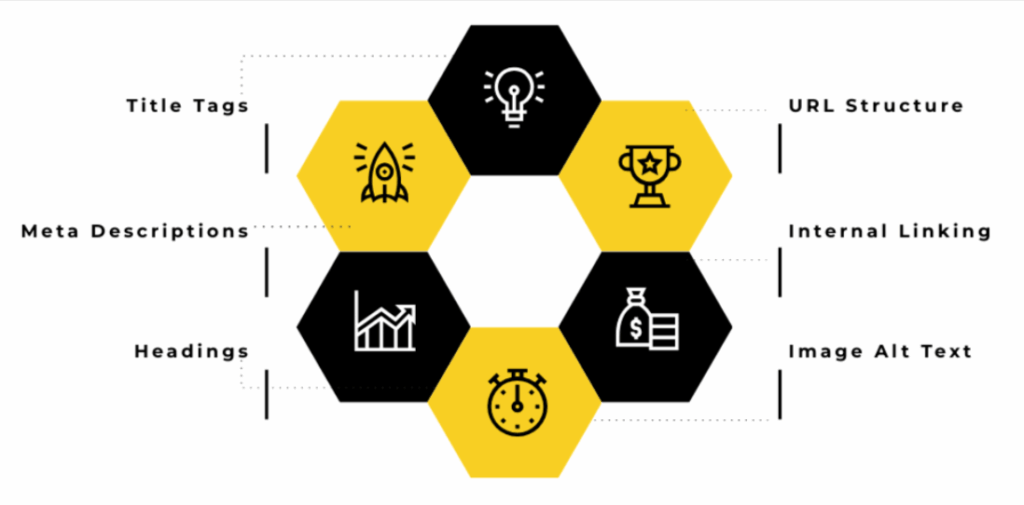
For travel websites and content, on page SEO is a critical factor as it assures that your content is also search engine friendly, easily readable, and actionable for travelers. Correcting each page lifts the ranking along with improved user experience and a possible turn in featured snippets, maps, or any other SERP features.
Content Layout
A well structured layout keeps users engaged and helps search engines understand your content hierarchy. Key practices for travel sites include:
1. First 100 Words Matter
The main objective of the opening paragraph must be quite clear from the onset. For instance, if the page is a “7 Day Tokyo Itinerary”, the initial few sentences should state what the user will receive—daily schedule, transportation tips, expected costs, and what sightseeing spots one cannot afford to miss.
2. Headings (H2/H3/H4) for Scannability
This is an age of digital literacy where so much is read on screens and for so long. Due to this, a travel guide is quite long most of the time. Thus break any such copy down into manageable headings that point to sections at a glance.
- Overview of the destination
- Transportation options
- Daily itineraries
- Costs and budget tips
- Recommendation for accommodation
The headings go a long way, helping readers quickly scan the content and guiding the search engines to visit, index, and prize the copy.
3. Bullet Points and Tables
Bullet points can be used effectively whenever a list or a checklist is provided, e.g. “Top 5 attractions in Kyoto”. Comparative tables are useful for presenting dynamics side by side, such as hotels, costs, and options for transportation. Use eye catching elements like this to break up the monotony and give the content more spotless display, thus enriching user experience.
4. Multimedia Integration
Images, Maps, and Tables are inseparable from travel content:
- Real Travel Photos: Real images build trust, thus reflecting firsthand experience.
- Route Maps: Maps shown embedded with starkly marked-out routes help users plan effectively and stay on your site longer.
- Cost Tables: A visual breakdown of expenses in terms of transportation, accommodation, meals offering operational information.
5. FAQ Section
This section is meant to give direct answers to travel oriented questions on the webpage in order to make the page that much more relevant and thus content displayed on Google Featured Snippet.
Source Questions from Real Queries
- Google People Also Ask Questions, i.e., PAA : Recognize traveler queries that frequently come up.
- Travel Forums and Q&A Platforms: Sites like TripAdvisor, Lonely Planet forums, or Quora elucidate the questions that bother travelers the most.
- Reddit Threads and Social Media Discussions: Subreddits such as r/travel and specialized Facebook groups by destinations disclose the rarely touched topics and questions.
FAQ Structuring
- Format each question as a heading (H3 or H4).
- Provide brief answers (50-120 words) that are actionable, including examples, costs, or local tips where possible.
SEO Benefits
- FAQ sections increase content relevancy and persuade search engines to infer that the page is fully covering the topic.
- They increase the chances of attracting rich snippets or getting listed in the “People Also Ask” section.
- Answering common queries outright on the page helps curb your bounce rate while entertaining users longer.
For travel related FAQs, the following additional examples can exist:
- Is Tokyo safe to visit at night?
- How much does a 7-day trip to Bali cost?
- Do I need a visa for Italy if I’m from the US?
- What’s the best way to travel between Venice and Florence?
By touching different flashes to address user intent, a strong FAQ section that emerges with full authority makes a foundational element in SEO on travel websites.
Building E-E-A-T for Travel Sites
Google specifically evaluates content in the travel niche for Experience, Expertise, Authority, and Trustworthiness, that are authentic and verified exclusive.
Experience Signals
- Include authentic travel photos with timestamps or EXIF metadata.
- Use first-person notes like “Last visited March 2024; metro line updates applied.”
- Provide evidence for costs, transport, or itinerary suggestions.
Authority & Trust
- Cite official sources: tourism boards, transport authorities, and government advisories.
- Maintain author bios highlighting travel experience and credentials.
- Update content regularly to reflect seasonal changes or new regulations.
E-E-A-T signals are critical for SEO for travel sites because Google prioritizes authoritative and trustworthy travel information.
Link Building for Travel Websites
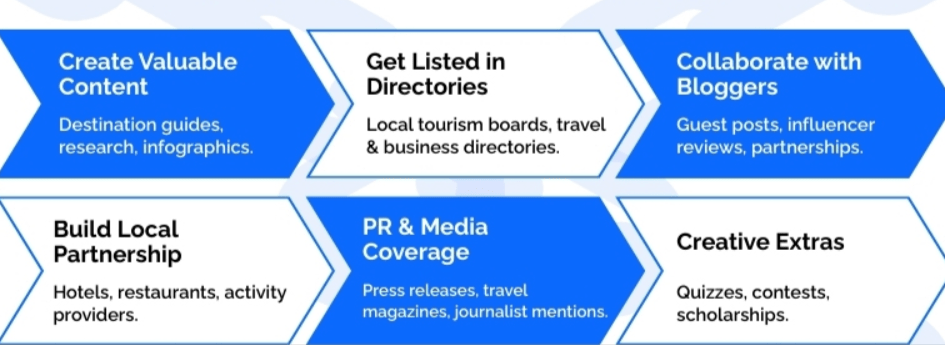
Building relationships is a popular method in link building for travel websites, however, it works best when it is considered as value created instead of spam-outreach. Again, proper backlinking grows positions and sends specific mark visitors who are hunters at it.
Passive necessities such as visa guides, travel cost breakdowns, event calendars, interactive maps, and itinerary planners naturally attract backlinks from the blogosphere and forums.
Corporation with tourism boards, small local businesses, and influencers that will co-create guides, links, or photograph heavy content and gain those genuine and high-quality backlinks.
Interactive tools like packing list generators, budget calculators, or “best time to visit” charts can be shared further socially and get connections repeatedly for quite a while.
Other travel specific link building activities involve the following:
- Guest posts and collaborative posts on restricted travel segments and local tourism websites providing input about different destinations, experiences, or travel tips.
- Another idea could be infographics about destinations, cost, or seasonal trends, tremendously shareable on blogs and Social Media.
- However, you could certainly consider collaboration with immensely large travel YouTubers or Instagram influencers; these can, in turn, redirect traffic back to your guides, maps, interactive games, etc.
- Surveys and research in the name of truth, especially polls on traveler habits or budgeting trends, are sure to get citations from other websites citing your research data.
- By sponsoring a local event or festival, you will be open to linking back from the event’s official website, sometimes wrongly treated by tourism.
Local SEO for Travel Businesses

Local SEO could drastically benefit business settings, like hotels, tour operators, local guides, restaurants, and experiential providers. If a business can rank locally in a search, a traveler will have the chance to see that business when looking for what to do or what to eat at their destination. If there are no local SEO optimizations then no matter how great the travel content is, it might go to waste as potential visitors may not come.
Key Tactics for Local SEO
- Optimizing Your Google My Business Profile
- Make sure your NAP UserName contains the right name, address, and phone number.
- Use professional photos of your property, tour, or food experience.
- Keep changing the developments mentioned in events, offers, or seasonal services.
- Enable and manage the Q&A section so the traveler’s questions about your business can be answered in search results.
Go ahead and include categories and attributes that are the most suitable for your nature of business (examples include: family-friendly tours and pet-friendly hotels).
Build Citations on Travel Specific Platforms
- List your business in the relevant travel directory platforms including TripAdvisor, Booking.com, Viator, Hostelworld, and local tourism directories.
- Search engines get confused and diminish trust in a business which is not presented the same in NAP identification details across platforms.
- Natural link building is forever changing; the more authoritative the travel domains you collect. The more DA (domain authority) it will be held on your local rank.
Encourage Location Specific Reviews
- Review may move your trustworthiness up which can be of help for any local query search.
- Leave a message for the visitor to dialogue around and call for the mention of specific landmarks, neighbourhoods, or service providers in reviews.
- Reply to comments or reviews in a tranquil and professional manner, acknowledge concerns, and say thank you for any gratifying comments which will showthat you are interested in developing relationships and are receptive to feedback.
Use Local Keywords in Content
- With a locality in any phrase, you will bring them into the headlines, the meta description, and the body, such as ‘The Best in Santorini’ rooftop restaurants, gold sand beach port, arm cherry, city central and so forth.
- Optimize your real estate location pages to feature geolocator-specific descriptions such as city names, district names, or attraction names.
Performance Tracking and Scaling
Tracking of KPIs to reflect both rankings and user actions:
- Growth in indexed pages
- CTR and bounce rate
- Return-to-SERP behavior
- Affiliate conversions and bookings
- Seasonal performance adjustments
Scaling can be maintained through keeping in touch with good-performing topical scores, incorporating new destinations or market segments.
Conclusion
At the moment, the current stride cannot be directly branded with SEO. The fight to get ahead requires right structuring, its ability to declare subject-matter expertise, a well-fitting connection to the user’s search intent, and offers of interest to an end user, or in other words, a solution to a travel scenario. Such checked-and-tried SEO strategies shall thrust the site to the top of the SERP and bring in natural backlinks, leave a lasting impression on the visitor, thus transforming wandering page viewers into ardent travelers.
FAQs
How are seasonal trends impactful to travel SEO?
Consumer interest for destinations fluctuates seasonally in greater volumes. Knowing when these trends appear enables you to optimize your content for these peak periods and plan updates to engage your audience off-season.
What are the best tools to measure a travel website’s SEO performance?
Like Google Analytics, Google Search Console is the utmost effective tool to guide you through monitoring traffic metrics for your travel niche, while Ahrefs, SEMrush, and Screaming Frog will also report backlinks, ranking, and other technical difficulties.
What layers are helpful to optimize images for travel SEO?
Optimized image data: Properly structured image files, alt text representing the right keywords, compressed formats assisting render you support better page load times and higher rankings in the image search of Google.
How can interactive maps help travel site SEO?
Interactive maps increase user engagement, time on page, and click-through rates. Moreover, when embedded on another site, they can naturally encourage backlinks that ultimately assist in increasing domain authority.
For local travel businesses, how important is schema?
Google benefits from such structured data, as it helps them understand what you’re offering, possibly making your content eligible for rich snippets. Accordingly, their click-through rate might just jack up for those local searches.
How much do social signals matter in SEO for travel?
Not as a direct ranking factor, but such optimization certainly impacts the visibility of a brand, referral traffic. and nofollow backlinks. Whether content is well-received on social media or not, it could indirectly affect the search engines in your favor.