Although an SEO title tags may seem unimportant, it has an influential role in Search Engine Optimization (SEO) and in making the page understandable to a search engine and determining whether a user clicks your result or just passes it. If there are two posts with the same content, the one with the title tag that is clever and well optimized gets more visibility and even more clicks.
The majority of bloggers devote hours to the writing of content, but only a few seconds for the writing of the title. Such a mistake may lead to losing the position in the search result, thus losing the traffic and engagement. This Article will take you through the process of writing an SEO friendly title tag step by step, even if you don’t have any prior knowledge on the topic.
What an SEO Title Tag Actually Is?
A title tag is the blue clickable headline that appears in the search results. It is used by the search engines to get the gist of the page. It is the users who get the benefit of the title when making their decisions for the page they want to visit.
You will also see the title tag:
- In browser tabs
- In social media previews
- On messaging shares
Example:
Title tag: “How to Start a Blog in 2025: Simple Beginner Guide”
The title is quite informative, the target keyword is present, and it also offers the user a benefit.
Why SEO Title Tags Matter in Search Results
When someone searches on Google, titles guide their decision. Even if a page ranks well, a poor title can lead to low click through rate and wasted traffic potential.
Here’s why they are important:
- Define what your page is about: Google makes use of title tags to ascertain the topic and subsequently line it up with user searches.
- The title tag also aids in the ranking signals: A direct keyword in the title acts as a link between the search engines and your content and enables them to discover the related search intent.
- Influences the user’s decision: Titles are being used by the searchers to determine if your page has the answer to their question or resolves their issue.
- Improve click through rate (CTR) : A powerful title can attract a larger audience, which in turn signals relevance to Google and may improve rankings.
- They create first impressions : A poor or unclear title can, in fact, result in the people not noticing your result even if your page has a good ranking.
If your title demonstrates the user’s need distinctly, then you are more likely to gain the click – even if your website is not on the top spot.
Where Title Tags Appear and How Search Engines Use Them
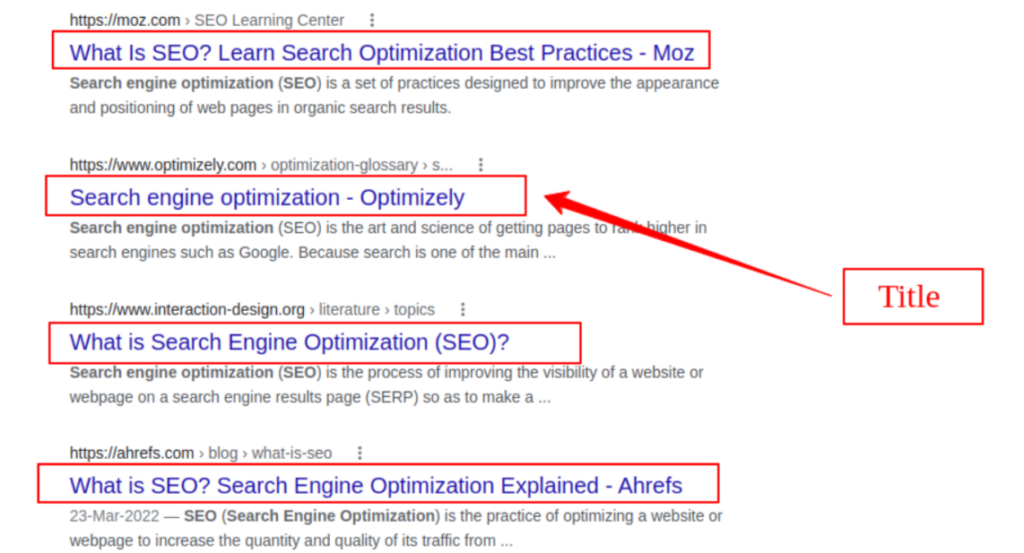
Title tags show up in more places than just Google results. They act as a primary label for your page across the web, which is why they must be clear and meaningful.
Title tags appear in:
- Search results — as the clickable headline users see before opening your page.
- Browser tabs — helping users remember or find your page when multiple tabs are open.
- Social media previews — platforms like Facebook, LinkedIn, WhatsApp, and Twitter use the title to generate link previews.
- Bookmarks and saved pages — users rely on titles to identify what the link contains.
Understanding User Intent Before Writing Your Title
Before writing a title, you must know what the searcher is expecting. Someone searching:
- “What is a title tag?” wants a definition
- “SEO title best practices” wants guidance
- “Examples of good title tags” wants templates
If the title is not in line with their expectations, they will move on to the next link.
So the first rule is: Create a title that corresponds with the user’s actual need, not the one that sounds witty.
Keyword Selection: The Foundation of a Strong Title
A strong SEO title starts with the right keyword. This keyword should match what users type into search engines and clearly reflect the topic of your page.
When choosing a keyword, focus on:
- Search volume — users should actively search for it, not a phrase that no one uses.
- Search intent — the keyword should match what users want to learn or solve.
- Relevance — the keyword must represent the content accurately.
Examples related to this topic:
- seo title tags
- title tag best practices
- how to write title tags
- optimize title tags for seo
Only one main keyword should be used. Multiple unrelated keywords make the title confusing and reduce clarity.
Good example:
How to Optimize SEO Title Tags for Better Search Visibility
Bad example:
SEO Title Tags | SEO Titles | Write SEO Titles | Best SEO Titles
How to Write Great SEO Title Tags
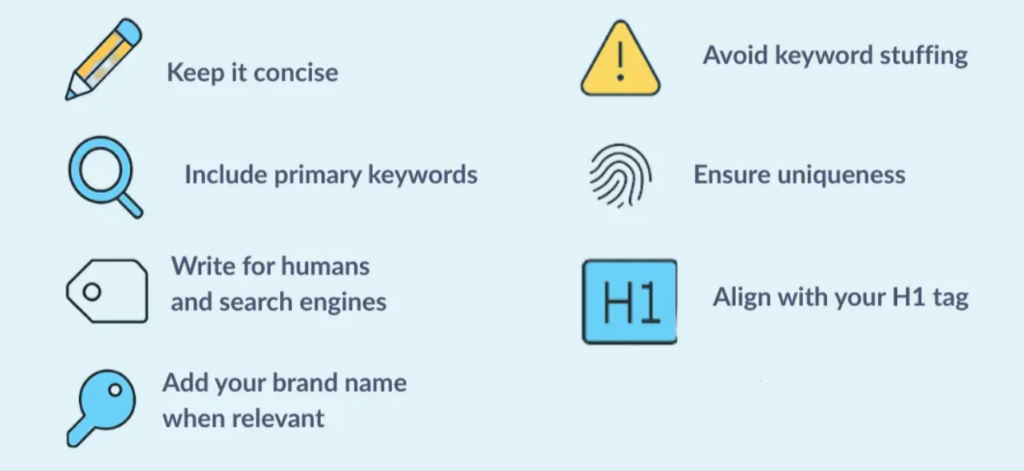
A wonderful SEO title tag is one that is short, clear, focused on keywords, and offers users a direct reason to click. The purpose is to quickly convey the topic and at the same time make the title both useful and relevant. Utilize the following steps to consistently build strong titles over time.
1. Use a Simple and Proven Structure
A clear structure helps keep your title focused and readable. One effective pattern is:
Primary Keyword + Intent/Format + Benefit or Outcome
This way, the keyword is included naturally, the reader knows what the content is about, and the title conveys value.
Examples:
- How to Write SEO Title Tags That Improve CTR
- SEO Title Tags: 10 Examples and Best Practices
- Title Tag Checklist: Fix Common SEO Mistakes
This title tag structure is effective because it offers clarity, and relevance, along with a specific reason to click.
2. Put the Main Keyword Near the Front
The search engines place a little more importance on the keywords that are at the start of the title. Moreover, users have the habit of quickly scanning the results, and in this case, a keyword that is positioned at the front helps them to recognize if the page is relevant to their search.
For example:
- Better: SEO Title Tags: Step-by-Step Guide
- Weaker: Step-by-Step Guide to SEO Title Tags
Regardless of the similarity in content, the first version is more easily scanned and search behavior aligned than the latter.
3. Make Your Title Tags Unique
Each page needs to have a distinct title tag. If the titles are duplicated, then it becomes ambiguous which page is more relevant which may cause weak rankings, and visitors’ confusion.
If pages cover similar topics, add small differences such as:
- Audience (Beginners, Bloggers, Agencies)
- Format (Checklist, Guide, Examples)
- Year or update (2025, Updated, New)
Example:
- SEO Title Tags: Beginner Guide (2025)
- SEO Title Tags: Advanced Strategies for Agencies
The difference prevents overlap and helps each page target a specific audience.
4. Ensure the Title Accurately Reflects the Page
Your title must correspond to the content. If the title indicates a list, tutorial, steps, or examples, then the page should provide exactly that. Titles that mislead may get clicks but will create high bounce rates, which could be detrimental to rankings and erode user trust.
Accurate titles help:
- Reduce bounce rate
- Improve engagement
- Build credibility
Always match the promise in the title with the actual content.
5. Add a Clear Benefit or Angle
A title that is powerful explains the reason as to why someone should click. The benefits can be speed, simplicity, examples, templates, or a step-by step format. When a user notices a benefit, the title becomes more actionable and attractive.
Examples:
- How to Write SEO Title Tags (Step by Step)
- SEO Title Tags: 10 Templates You Can Use Today
Adding a clear angle makes the title more specific and increases click through rate.
6. Use Helpful Modifiers (But Not Too Many)
Modifiers make titles more specific and useful. They help narrow the promise and target a certain type of searcher.
Useful modifiers include:
- simple
- quick
- examples
- checklist
- beginner
- proven
- template
Stay away from exaggerated or oversized words like perfect, ultimate, or best ever unless the content is able to support it. Only use modifiers when they clarify the title, not when they lengthen it.
7. Keep the Length Within Display Limits
Normally, Google displays 50 to 58 characters for titles. Anything longer than that will likely get truncated on mobile devices. By making your title concise, you not only enhance the readability but also make sure that the most important words are viewed before the cutoff.
If extra context is required, put it at the end so the main keyword appears first.
Example:
- SEO Title Tags: Beginner Guide — Updated for 2025
8. Avoid Keyword Stuffing
Use your main keyword one time in a natural sentence. Repeating keywords or forcing extra variations makes the title look artificial and reduces the user experience.
Example of keyword stuffing:
- SEO Title Tags Guide | Best SEO Title Tags Tips | Write SEO Titles
Better version:
- How to Write SEO Title Tags: Simple Guide for Beginners
Clean titles look more trustworthy and are easier to read and click.
Improving Click Appeal Without Clickbait
SEO titles should encourage clicks, but they must stay honest. A simple way to make a title more attractive is to use clarity, numbers, or format based wording.
Helpful modifiers:
- Step-by-step
- Checklist
- Examples
- Mistakes to avoid
- Tips
- Beginners guide
Examples:
- SEO Title Tags: 10 Examples You Can Copy
- Title Tag Checklist: Fix Common SEO Mistakes
These variations give users a clear reason to choose your content.
Frequently Asked Questions (FAQs)
1. What is an SEO title tag?
An SEO title tag is the clickable headline that shows up in the results of the search engine. It provides information to the search engines as well as the users about your page. It is one of the most critical on-page SEO components.
2. How long should an SEO title tag be?
The ideal length for a title is about 50 to 58 characters. This way, Google will show the whole title in the search results without cutting off the last part.
3. What is the difference between a title tag and a page heading (H1)?
A title tag is visible in search engines and browser tabs while the H1 heading is displayed on the webpage itself. Both should be alike but not necessarily identical all the time.
4. How often should I update my title tags?
You should update title tags when:
- The content changes
- Search intent shifts
- A page is underperforming
- The year becomes outdated
5. Can I use emojis in title tags?
Indeed, but they should be handled with caution. Emojis can attract attention but they must fit the theme and be professional. Not all the emojis are consistently displayed across different devices.
6. What happens if two pages have the same title tag?
Duplicate titles may lead to misunderstandings between search engines and users. Google might be uncertain about the relevance of the pages and thus their rankings might be negatively affected. Every page must have its own distinct title.
Final Thoughts
A good title tag is not just a ranking element — it’s a decision maker. When effectively done, it not only helps search engines recognize your page but also assures readers that your content is worth their time.
A powerful title is a result of comprehending intent, selecting the right keyword, articulating clearly, and refining based on performance. With practice, this becomes a consistent process—not guesswork.